UTERINE FIBROIDS (LEIOMYOMA)
16 Septmber 2025, Tuesday
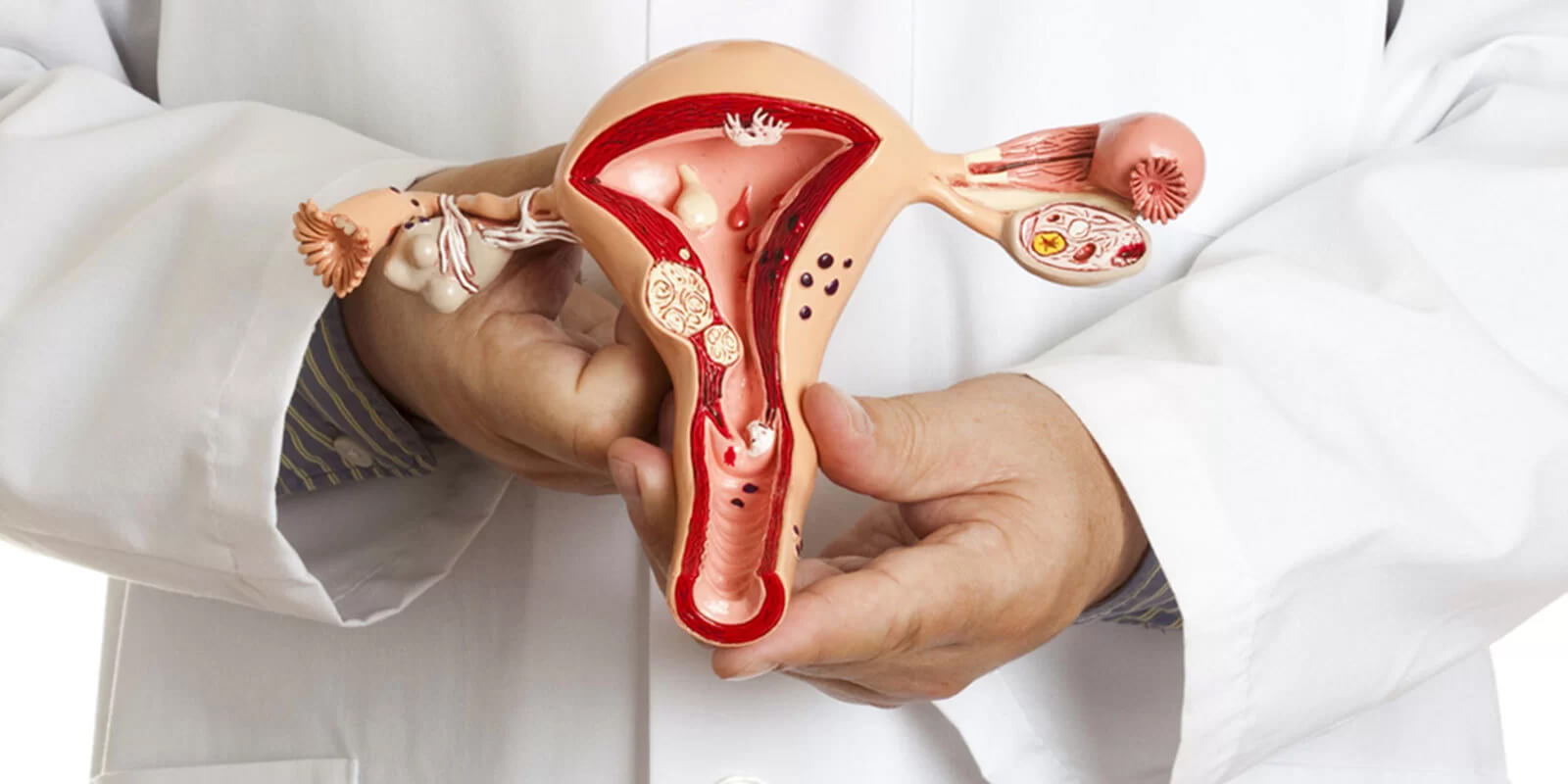
LEIOMYOMA
Uterine fibroid is a benign tumor composed of smooth muscle cells of the uterine body or cervix. It is non-malignant and rarely undergoes sarcomatous transformation.
Etiology and Risk Factors
- Genetic predisposition
- Early menarche, late menopause
- Obesity, metabolic disorders
- Nulliparity
- Estrogen stimulation
- Chronic stress
- Endocrine disorders (e.g., thyroid disease)
Fibroids are monoclonal tumors (originating from a single mutated cell), commonly associated with MED12 gene mutations and impaired angiogenesis.
Classification (FIGO)
Submucosal (types 0–2)
- Type 0 — entirely within the endometrial cavity
- Type 1 — <50% intramural
- Type 2 — >50% intramural
Intramural / Interstitial (types 3–4)
- Type 3 — contacts endometrium, 100% intramural
- Type 4 — fully intramural
Subserosal (types 5–7)
- Type 5 — >50% intramural
- Type 6 — <50% intramural
- Type 7 — subserosal with a stalk
Type 8 — other locations unrelated to myometrium (e.g., cervical, round ligament, broad ligament)
Main Symptoms
-
Asymptomatic course — in most women, fibroids are asymptomatic, usually found incidentally by ultrasound
-
Menstrual cycle disorders, more often heavy, prolonged menstruation
-
Intermenstrual bloody discharge
-
Lower abdominal pain
-
Pain during sexual intercourse
-
Dysfunction of neighboring organs:
o Pressure on the bladder → frequent urination
o Pressure on the intestines → constipation
-
Infertility, pregnancy loss
Diagnosis
Uterine fibroid usually does not cause difficulties in diagnosis:
- The doctor may suspect the presence of nodes during a gynecological exam
- Ultrasound examination (US) — gold standard of diagnosis. Transvaginal or transabdominal probe is used
- Hysteroscopy — to diagnose submucosal nodes
- MRI — in complex cases and for surgical preparation
Treatment
Treatment is selected individually during a consultation with an obstetrician-gynecologist. It depends on:
- Location and size of the nodes
- Presence of symptoms
- Age of the patient
- Reproductive plans
Conservative:
- Observation
- Medication treatment
Surgical:
- Myomectomy — organ-preserving operation
- Hysterectomy — removal of the uterus
- UAE (uterine artery embolization)
- FUS-ablation
Complications and Prevention
Complications:
- Anemia
- Dysfunction of neighboring organs
- Reproductive difficulties
- Torsion of the subserosal node pedicle
- Necrosis of the myomatous node
Prevention:
- Regular pelvic ultrasound
- Hormonal background monitoring
- Body weight control
Fibroid and Pregnancy
A fibroid does not always cause complications during pregnancy. Everything depends on the size and location of the nodes. Submucosal fibroids may interfere with embryo implantation and reduce conception chances. With small intramural or subserosal nodes, pregnancy often occurs spontaneously. Myomatous nodes may increase the risk of: miscarriage, preterm birth.
With regular medical follow-up, most women successfully carry a pregnancy.
When to See a Doctor
- Heavy or irregular menstruation
- Lower abdominal pain
- Conception difficulties
- Abdominal enlargement
- Diagnosed fibroid — to clarify treatment tactics
Karina Tonoyan, Gynecologist
Karina Tonoyan, Obstetrician-gynecologist
Education
- Faculty of Medicine of Yerevan State Medical University named after Mkhitar Heratsi
- Clinical residency in obstetrics and gynecology at the Altai State Medical University, 2020
- Ultrasound diagnosis, 2022, Barnaul
- Gynecological endocrinology, 2024, Moscow
Professional activity
- Maternity hospital No. 2, Barnaul, 2020-2022
- Hospital of urgent treatment, Barnaul, 2020-2022
- "VitaMed" Medical Center, Yerevan, 2022
Conferences
- "Unresolved problems of diagnosis, treatment and recovery in obstetrics and gynecology" scientific conference
- "Antibacterial therapy in obstetrics: controversial issues" scientific conference
- "Principles of diagnosis and treatment of non-infectious diseases of the anogenital area" scientific conference


 479
479


