DIFFUSE TOXIC GOITER
05 November 2025, Wednesday
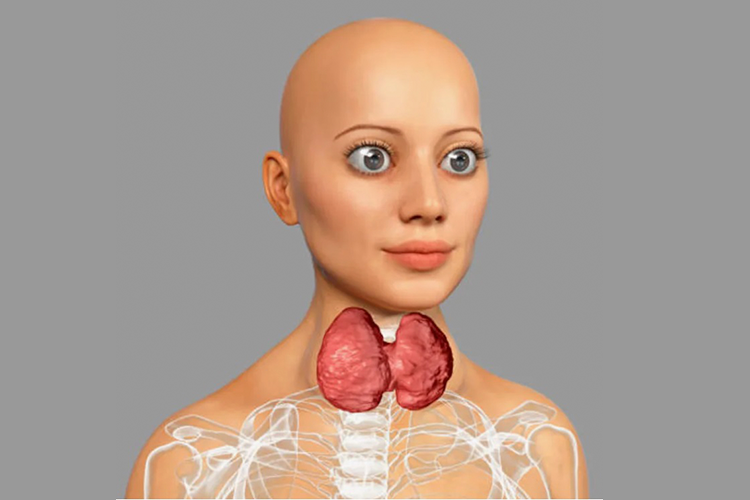
What is Diffuse Toxic Goiter (Graves' Disease or Basedow's Disease)
Diffuse toxic goiter is a systemic autoimmune disorder. It develops as a result of the formation of stimulating antibodies that continuously bind to thyroid-stimulating hormone (TSH) receptors, without being regulated by the body. This leads to excessive production of thyroid hormones (hyperthyroidism), resulting in thyrotoxicosis with its characteristic clinical manifestations.
What are the clinical manifestations?
Key symptoms include:
- Tachycardia (resting heart rate up to 120–130 bpm)
- Palpitations (patients may feel heartbeats not only in the chest but also in the head, abdomen, and limbs)
- Arrhythmias (irregular heart rhythm)
- Weight loss despite increased appetite
- Nervousness and emotional instability (outbursts of aggression, chaotic and ineffective activity, tearfulness)
- General weakness
- Persistent feeling of heat, even in cold environments
- Excessive sweating (palms are almost always moist)
- Tremor (shaking of the fingers)
- Endocrine orbitopathy (eye changes, often considered the "hallmark" of the disease)
What causes the disease?
The exact causes are still not fully understood. According to the most accepted theory, the development of the disease is facilitated by external factors—such as severe stress—on the background of a genetic predisposition.
Who is most at risk?
Women are 10–15 times more likely to be affected than men. The disease mainly affects individuals aged 20 to 50 years.
What are the treatment options?
1. Medication (conservative treatment) with antithyroid drugs (thyreostatics).
Treatment is long-term (12–18 months) and must be monitored by a physician. It is considered almost ineffective in the following cases:
- Thyroid volume exceeds 40 mL
- Severe thyrotoxicosis based on FT3 and FT4 levels
- Recurrence of the disease after a full course of drug treatment
- Prolonged course of thyrotoxicosis regardless of therapy
- Antibodies to TSH receptors are elevated more than 10-fold
2. Surgical treatment
3. Radioactive iodine therapy
The latter two methods are considered radical (i.e., definitive treatment) and are used when medication is contraindicated, ineffective, or impossible. After these treatments, lifelong hormone replacement therapy is prescribed.
What is the prognosis?
- Without treatment, the prognosis is unfavorable.
- With treatment, the prognosis is generally favorable.
However, the relapse rate after 12–18 months of medical therapy is approximately 70–75%.

Satenik Movsisyan, Endocrinologist
Satenik Movsisyan
Education
- 1997-2007 Secondary School No. 1 named after Grigor Narekatsi, Metsamor, Armavir Region.
- 1998-2005 Piano Department of the Art School named after Charles Aznavour, Metsamor
- 2007-2012 Bachelor's degree in the Faculty of Medicine, Yerevan State Medical University named after M. Heratsi.
- 2012-2015 Master's degree in the Faculty of Medicine, Yerevan State Medical University named after M. Heratsi.
- 2015-2018 Clinical residency in the specialty "Pediatric Endocrinology". Yerevan State Medical University named after M. Heratsi.
Professional activity
- 02.2019 - 10.2019 - endocrinologist at the RMC "Armenia"
- 10.2019 - present - endocrinologist at the MC "Cardiolife"
- 01.2023 - present - endocrinologist at the MC "VitaMed"
Trainings
- 11.12.2018 - 12.28.2018 - advanced training course "Modern issues of clinical endocrinology" (for endocrinologists and pediatric endocrinologists)
- 11.25.2024-12.06.2024 - advanced training course on the topic "Current issues of dietetics and nutrition"


 463
463


