

ENMG
Electroneuromyography (ENMG) 16 May 2026, Saturday,
 10723
10723
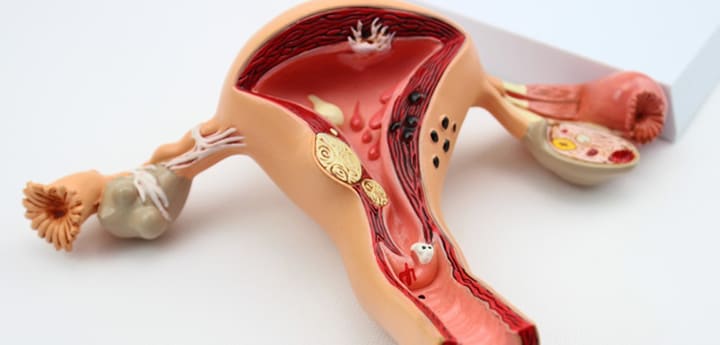
An endometrial polyp is a benign growth arising from the endometrial lining of the uterus.
Although the exact cause is unknown, several factors are associated with increased risk:
• Hormonal imbalance
• Chronic endometritis
• Use of tamoxifen (used in breast cancer treatment)
• Long-term cyclic menopausal hormone therapy (MHT)
• Obesity, metabolic syndrome, arterial hypertension
• Polycystic ovary syndrome (PCOS)
Histological classification:
• Glandular — composed mainly of endometrial glands
• Glandular-fibrous — mixed glandular and stromal tissue
• Fibrous — predominantly dense stroma
• Atypical (adenomatous) — with proliferative changes, potentially precancerous
• Placental polyps — formed from retained placental tissue after childbirth, miscarriage, or abortion
Other features:
• May be solitary or multiple
• Size ranges from a few millimeters to several centimeters
Many polyps are asymptomatic and discovered incidentally during ultrasound. However, possible symptoms include:
• Acyclic uterine bleeding
• Prolonged or heavy menstruation
• Infertility or subfertility
• Postmenopausal bleeding
Initial assessment: transvaginal ultrasound
Gold standard: hysteroscopic polypectomy followed by histopathological examination
The primary treatment is hysteroscopic removal (polypectomy) with histological verification.
Observation may be an option depending on patient age, symptoms, and reproductive goals.
Polyp removal is recommended if:
• Symptomatic (e.g., heavy or irregular bleeding)
• Associated with infertility
• Found in postmenopausal women
• Size >1 cm
Potential complications:
• Anemia
• Recurrence of polyps
• Malignancy risk (0.3–5.4%), especially postmenopause
Prevention strategies:
• Regular gynecological check-ups
• Managing modifiable risk factors: obesity, metabolic or hormonal disorders
• Timely treatment of uterine or adnexal inflammation
Endometrial polyps may impair fertility or cause miscarriage, especially if they distort the uterine cavity or interfere with embryo implantation.
Hysteroscopic polypectomy significantly increases the chances of natural conception or IVF success.
• Irregular or heavy menstrual periods
• Intermenstrual or postmenopausal spotting
• Difficulty conceiving
• Suspicious findings on ultrasound indicating a possible polyp

Karina Tonoyan, Obstetrician-gynecologist


RA, 0048, Yerevan, Beknazaryan St., 3/6 Building
055 360303, 012 300303
RA, Lori Marz, Stepanavan, Garegin Nzhdehi St., 23 Building
044 360303, 0256 20303
RA, Kotayk, Charencavan, 4-th pr., 19 house
033 360303
Mon-Fri 9։00-19։00
Saturday 09։00-16։00
Sunday 10։00-13։00


VitaMed © 2026 All Rights Reserved


