

ENMG
Electroneuromyography (ENMG) 16 May 2026, Saturday,
 10721
10721
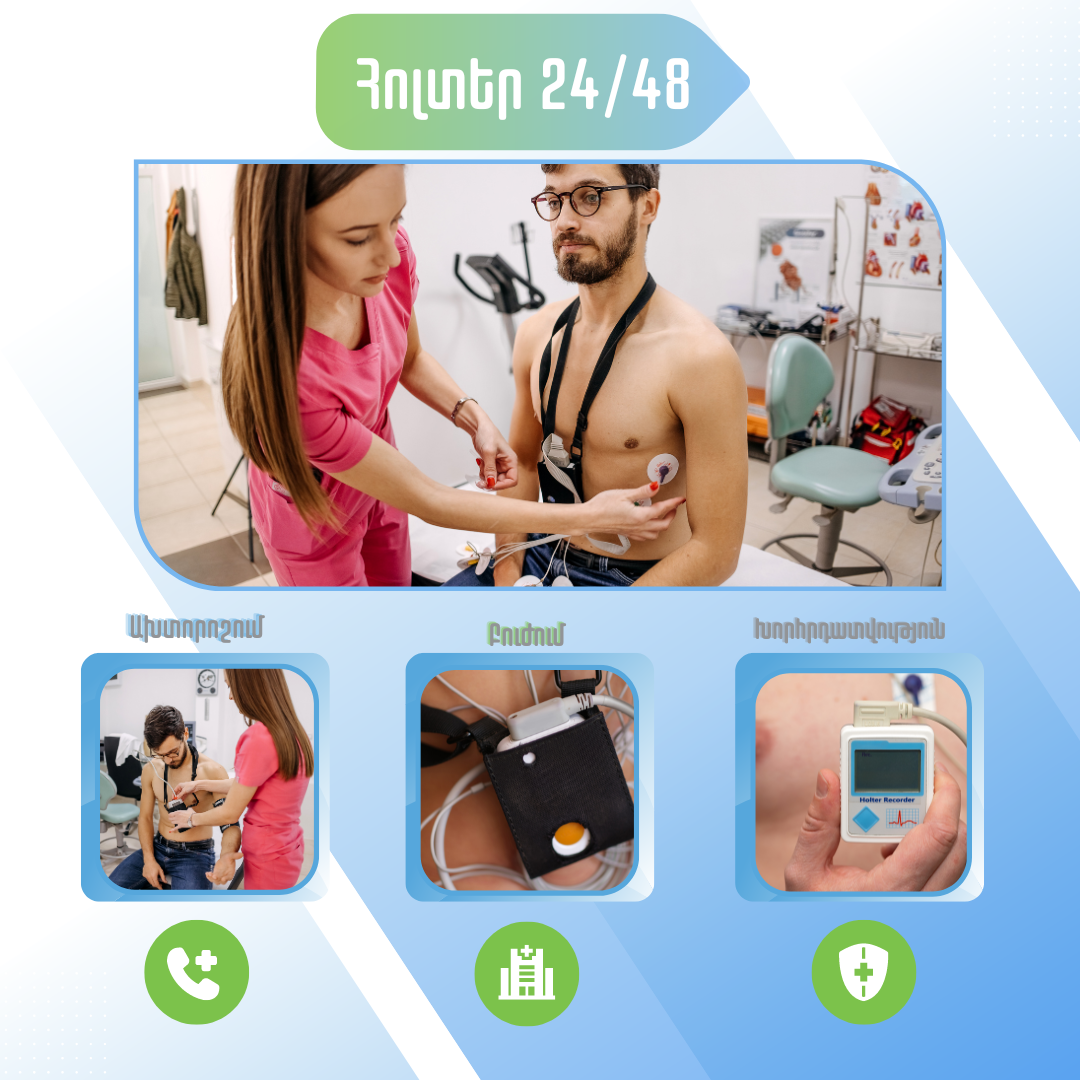
A Holter monitor is a small device that records the heart's rhythm, usually for 24 to 72 hours. It is used to record the heart's rhythm and conduction during everyday activities.
Holter monitoring can be used when a regular electrocardiogram does not provide enough information.
Helps detect arrhythmias that occur during moderate physical activity, signs of malnutrition.
Before Holter monitoring, an electrocardiogram is performed.
Holter monitoring has no significant risks. Some people experience discomfort or redness where the electrodes are attached.
The Holter monitor is usually not affected by other electrical devices. However, some devices can interrupt the impulses from the monitor's electrodes.
You should also keep your cell phone away from the Holter monitor for the same reason.
First and foremost, you will be fitted with a Holter monitor in a medical facility. It is advisable for the patient to be bathed before fitting. The monitor should not be removed or wet; it must remain dry.
Small electrodes with sensors are attached to the chest. You should not limit your daily activities while wearing the Holter monitor.
After the examination, the healthcare provider turns off and removes the device, and the doctor-cardiologist interprets the data using a special computer program.
| ECG monitoring 24-hour (Holter monitoring) | 15000 AMD |
| ECG monitoring 48-hour (Holter monitoring) | 20000 amd |
| Electrocardiography | 4000 amd |
| Initial consultation with a cardiologist with the appointment of treatment, including an electrocardiogram | 15000 amd |
| Initial consultation with a cardiologist without examination | 12000 amd |
| Third visit to a cardiologist in a month | 5000 amd |
.jpeg)
Armen Shahbazyan, 11.01.1992 year of birth․


RA, 0048, Yerevan, Beknazaryan St., 3/6 Building
055 360303, 012 300303
RA, Lori Marz, Stepanavan, Garegin Nzhdehi St., 23 Building
044 360303, 0256 20303
RA, Kotayk, Charencavan, 4-th pr., 19 house
033 360303
Mon-Fri 9։00-19։00
Saturday 09։00-16։00
Sunday 10։00-13։00


VitaMed © 2026 All Rights Reserved


